Introduction: A Reshuffle Amid Growing Doubts
In a major cabinet reshuffle on 5 September 2025, Prime Minister Keir Starmer elevated Shabana Mahmood to Home Secretary and David Lammy to Deputy Prime Minister, while Lammy also retained his positions as Lord Chancellor and Secretary of State for Justice. These appointments followed Angela Rayner’s resignation over a tax controversy, signalling a pivotal moment for Labour’s leadership. Yet, beneath the veneer of progressive diversity, these choices spark profound questions: are Mahmood and Lammy truly equipped to represent the interests of Britain’s indigenous population, especially the white majority who have long formed the cultural and demographic core of the nation?
This investigative piece for RightOfCentre.uk probes their personal beliefs, past actions, and the broader Labour Party context. From Lammy’s embrace of the discredited Black Lives Matter movement to Mahmood’s fervent advocacy for Palestine, we examine whether these figures prioritise British concerns or imported ideologies. Moreover, a pattern of dismissive and even hostile attitudes from Labour MPs and councillors towards the white working class—evident in scandals involving grooming gangs and recent protests—casts a shadow over the party’s suitability to lead. Far from the glowing tributes in leftist outlets, these developments reveal a government increasingly alienated from ordinary Britons sceptical of unchecked multiculturalism and identity politics.
Shabana Mahmood: Faith, Palestine, and the Home Office—Whose Priorities Come First?
Shabana Mahmood, the MP for Birmingham Ladywood and of Pakistani descent, became the first Muslim woman to hold the Home Secretary post, a milestone celebrated in certain circles as a triumph of inclusion. However, her deeply held personal beliefs raise legitimate concerns about her impartiality in managing immigration, law enforcement, and national security—areas critical to preserving Britain’s social fabric.
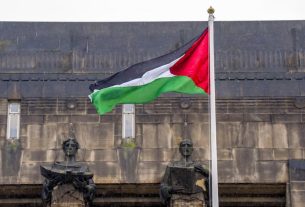
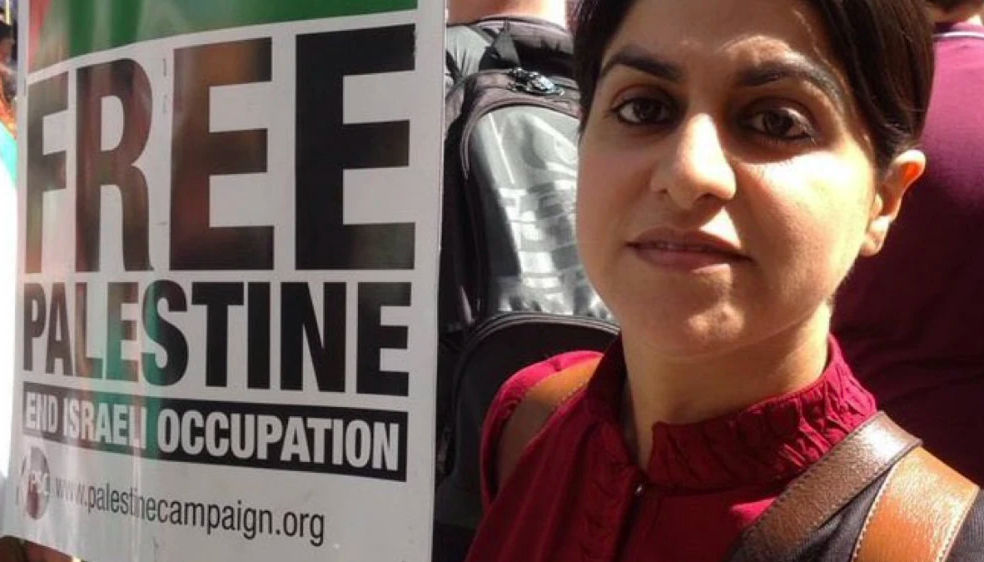
Mahmood has openly stated that her Islamic faith is the driving force in her life, influencing every decision she makes. While personal faith is a private matter, in a high-stakes role like Home Secretary, it demands scrutiny to ensure national interests aren’t subordinated to religious or international affiliations. Her staunch support for Palestine exemplifies this potential conflict. Mahmood has consistently voted in favour of recognising a Palestinian state, condemned Israeli policies on annexation, and participated in pro-Palestine rallies organised by groups such as the Palestine Solidarity Campaign. She has been seen holding “Free Palestine” signs and addressing crowds at events pushing for a more anti-Israel foreign policy from the UK.
In her early days as Home Secretary, Mahmood’s approach to proscribing Palestine Action—a direct action group linked to vandalism of defence-related sites—further highlights these tensions. She chose to abstain from the parliamentary vote on designating it a terrorist organisation, later clarifying that supporting Palestine and backing proscribed groups are distinct. Yet, with hundreds arrested at protests against the ban shortly after her appointment, her promises of a tougher stance on migration and extremism appear unconvincing to many. Critics, including prominent voices in conservative circles, warn that such positions could strain international alliances, like the Five Eyes intelligence partnership, and signal a softening on threats that disproportionately affect Britain’s indigenous communities.
For the white majority, who have endured the societal impacts of rapid demographic shifts—including strained public services and cultural dilution—Mahmood’s worldview seems misaligned. Does her emphasis on global causes truly serve the indigenous Britons worried about border security and community cohesion, or does it risk importing foreign conflicts into domestic policy?
David Lammy: BLM Ties and Anti-British Sentiments in High Office
David Lammy’s rise to Deputy Prime Minister marks him as the first black individual in this influential role, but his history of championing divisive causes questions his commitment to unifying the nation. Lammy’s support for Black Lives Matter (BLM) stands out as particularly problematic, given the movement’s exposure as a Marxist-inspired operation plagued by financial impropriety.
During the 2020 BLM protests, Lammy was vocal in linking UK racial issues to American events, such as the death of George Floyd, and penned pieces lamenting how black lives are undervalued in Britain. He advocated for systemic changes, intertwining racial justice with climate activism in ways that echoed BLM’s broader ideological agenda. Since then, BLM’s founders have confirmed their Marxist leanings, and the organisation has faced lawsuits over the mishandling of tens of millions in donations, with funds allegedly diverted for personal gain. Lammy’s unapologetic alignment with this now-tarnished group suggests a preference for imported American-style racial narratives over addressing Britain’s unique challenges.
Lammy’s critiques of the British Empire and calls for slavery reparations have also been labelled as inherently anti-British by detractors. He has argued for confronting colonial legacies in ways that many see as guilt-tripping the white majority, eroding national pride without offering constructive solutions. In a party where ethnic minority voters form a growing base, Lammy’s positions may resonate with some, but they alienate the white working class—Labour’s traditional heartland—who feel their concerns about economic inequality and cultural identity are being sidelined. Polling indicates a zero-sum perception among white voters regarding ethnic representation, with Labour’s focus on diversity potentially costing it support in key constituencies.
As Deputy Prime Minister, Lammy’s influence on policy could amplify these divisions, prompting the question: is he advocating for all Britons, or primarily for agendas that challenge the indigenous majority’s place in society?
Labour’s Pattern of Disdain: Grooming Scandals, Violent Rhetoric, and White Working-Class Neglect
The appointments of Mahmood and Lammy cannot be viewed in isolation; they reflect deeper issues within Labour, where a string of MPs and councillors have displayed attitudes that belittle or threaten the white majority, particularly in sensitive areas like grooming gangs and public protests.
One glaring example is the handling of the Muslim grooming gang scandals, which predominantly victimised white working-class girls in towns like Rotherham, Rochdale, and Telford. Labour figures have repeatedly downplayed or dismissed these horrors. Lucy Powell, the current Leader of the House of Commons and a senior Labour MP, infamously referred to concerns over these scandals as a “right-wing dog whistle,” implying that raising the issue is merely a tactic to stoke division rather than a genuine call for justice. This characterisation ignores the scale of the abuse—thousands of victims over decades—and the institutional failures driven by fears of appearing racist, often under Labour-controlled councils.
Similarly, former Labour MP Sarah Champion was effectively hounded out of her shadow cabinet role after writing an article highlighting that the perpetrators in grooming cases were disproportionately from Pakistani heritage communities. Her attempts to address the cultural factors involved were met with accusations of racism from within her own party, forcing her resignation and underscoring Labour’s prioritisation of political correctness over victim protection.
The contempt extends to local levels. Peterborough Labour councillor Dennis Jones resigned in disgrace after describing Rotherham grooming victims as “poor white trash from Rotherham” during an online spat, a slur that exemplifies a callous disregard for the suffering of vulnerable white girls. Then there’s Naz Shah, the Bradford West MP, who retweeted a parody post suggesting that grooming victims should “shut their mouths for the good of diversity.” Although she later claimed it was accidental and deleted it upon realising the source was satirical, the act of retweeting requires deliberate steps—clicking once to select and again to confirm—raising doubts about her explanation. Even if unintentional, it hints at an underlying agreement with silencing victims to preserve multicultural harmony.
More recently, the party’s tolerance for extreme rhetoric has been exposed in the wake of the tragic Southport murders in July 2024, where three young girls were killed at a dance class, sparking nationwide protests against immigration and knife crime. Labour councillor Ricky Jones, speaking at a counter-protest in Walthamstow, unleashed a tirade against the demonstrators, calling them “disgusting Nazi fascists” and declaring, “we need to cut all of their throats and get rid of them all,” while making a slashing gesture across his neck. This shocking incitement to violence led to his suspension and arrest on charges of encouraging murder, but it reveals a disturbing undercurrent within Labour: labelling ordinary Britons concerned about child safety as far-right extremists worthy of elimination.
These incidents are not isolated; they form a mosaic of attitudes that marginalise the white working class. Jess Phillips, another Labour MP, has faced criticism for laughing during a debate on male suicide rates and for downplaying male victims of domestic violence, further alienating those who feel Labour views them through a lens of intersectional hierarchies where white, straight men rank low. Such patterns suggest a party more comfortable virtue-signalling on global issues than confronting domestic failures that hit indigenous communities hardest.
Do These Appointments—and Labour’s Leadership—Benefit the British People?
In conclusion, the elevations of Shabana Mahmood and David Lammy to top government roles must be weighed against their records and the Labour Party’s broader failings. Mahmood’s faith-centred approach and pro-Palestine activism may undermine confidence in her handling of home affairs, while Lammy’s BLM affiliations and empire critiques risk fostering division rather than unity. Compounded by a litany of scandals—from dismissing grooming victims as “trash” or “dog whistles” to councillors advocating throat-cutting for protesters—these choices appear to prioritise ideological purity over the welfare of Britain’s indigenous white majority.
For a nation grappling with identity erosion, economic pressures, and social unrest, Labour’s direction raises alarms. If the party continues to sideline the concerns of its core demographic in favour of progressive posturing, it may prove fundamentally unfit to lead the UK into a stable future. Britons deserve representatives who champion their interests unapologetically—not ones who seem to view them as obstacles to a utopian vision.